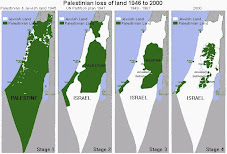
The Huffington Post – The Palestine-Israel conflict is no pesky regional skirmish. This century-long battle over territory threatens to draw the entire global community into its bowels if it is not dealt with soon, and the only way out of the current paralysis is to kill the "peace process" once and for all.
Monday, January 10, 2011
Former EU leaders call to sanction and boycott Israel
The Jerusalem Post- According to letter: Israel, “like any other state,” should answer for “the consequences” and “a price tag” for construction of housing in West Bank.
Twenty-six former European Union leaders, including the EU’s former top diplomat, Javier Solana, issued a letter last week calling for boycotts and sanctions targeting Israel due to settlement construction.
According to the letter, which was reported on the euobserver.com website and addressed to EU leaders, the Jewish state, “like any other state,” ought to be slapped with “the consequences” and “a price tag” for its construction of housing in the West Bank.
Ten former European leaders signed the December 6 letter, including Germany’s former president Richard von Weizsäcker and ex-chancellor Helmut Schmidt, former Irish president Mary Robinson, former Spanish prime minister Felipe Gonzalez and Thorvald Stoltenberg, an ex-Norwegian foreign and defense minister.
The 26 signatories called for the EU to prohibit import of products made in settlements, and demanded that Israel fund the bulk of aid to Palestinians. The letter also urged the EU to make an upgrade of relations with Israel contingent on the cessation of settlement construction. Read more
Twenty-six former European Union leaders, including the EU’s former top diplomat, Javier Solana, issued a letter last week calling for boycotts and sanctions targeting Israel due to settlement construction.
According to the letter, which was reported on the euobserver.com website and addressed to EU leaders, the Jewish state, “like any other state,” ought to be slapped with “the consequences” and “a price tag” for its construction of housing in the West Bank.
Ten former European leaders signed the December 6 letter, including Germany’s former president Richard von Weizsäcker and ex-chancellor Helmut Schmidt, former Irish president Mary Robinson, former Spanish prime minister Felipe Gonzalez and Thorvald Stoltenberg, an ex-Norwegian foreign and defense minister.
The 26 signatories called for the EU to prohibit import of products made in settlements, and demanded that Israel fund the bulk of aid to Palestinians. The letter also urged the EU to make an upgrade of relations with Israel contingent on the cessation of settlement construction. Read more


El-Arish ready to receive Libyan aid ship on way to Gaza
Ma'an – Egyptian officials at Port Said said Sunday that preparations were complete to receive a Libyan ship carrying aid for Gaza.
The Al-Marwa was scheduled to arrive Sunday with 700 tons of food and medical aid to be delivered to the besieged coastal enclave. Read more
The Al-Marwa was scheduled to arrive Sunday with 700 tons of food and medical aid to be delivered to the besieged coastal enclave. Read more
Israeli troops abduct teen in Hebron
IMEMC – The Israeli army abducted a 17-year old Palestinian boy in the Old City of Hebron late on Saturday night, according to local sources.
Local witnesses said that a boy identified as Fakhri Salayma, 17, was taken away by Israeli soldiers from his home without being given a reason for his detention.
The Israeli military had reportedly reinforced security measures across all West Bank cities and districts, anticipating retaliation for recent killings of Palestinian civilians by Israeli troops.
Several days ago, Israeli troops invaded Hebron and killed an elderly man who was asleep in bed -- the troops were allegedly attempting to assassinate the man's son and killed the father by mistake. Such targeted assassinations are violations of international law, but are common practice by the Israeli military.
After this and other recent attacks by the Israeli army, the army increased military patrols at entrances to Palestinian cities and erected roadblocks in different areas.
Local witnesses said that a boy identified as Fakhri Salayma, 17, was taken away by Israeli soldiers from his home without being given a reason for his detention.
The Israeli military had reportedly reinforced security measures across all West Bank cities and districts, anticipating retaliation for recent killings of Palestinian civilians by Israeli troops.
Several days ago, Israeli troops invaded Hebron and killed an elderly man who was asleep in bed -- the troops were allegedly attempting to assassinate the man's son and killed the father by mistake. Such targeted assassinations are violations of international law, but are common practice by the Israeli military.
After this and other recent attacks by the Israeli army, the army increased military patrols at entrances to Palestinian cities and erected roadblocks in different areas.
Israeli Academics, including Nobel laureates, Boycott Settlement University
IMEMC – On Sunday, 155 academics joined the boycott of the ‘Ariel University Center of Samaria', located in the illegal West Bank settlement of Ariel.
The university and college faculty members signed a petition calling for an academic boycott of the University Center, based in the largest Israeli settlement of Ariel. The lecturers stated in the petition: "We, academics from a variety of fields and from all the institutions of higher learning in Israel, herein express publicly our opposition to the continued occupation and the establishment of settlements."
Nobel laureates Yehoshua Kolodny, Benjamin Isaac and Itamar Procaccia were among the signatories of the academics' petition, which follows a similar boycott call by artists and actors several months ago.
The document denounced the "unbearably harsh conditions" Palestinians suffer in nearby villages and refugee camps, where the residents are deprived of their basic human rights. According to the petition, "Ariel was built on occupied land. Only a few kilometers away from flourishing Ariel, Palestinians live in villages and refugee camps under unbearably harsh conditions and without basic human rights. Not only do they not have access to higher education, some do not even have running water. These are two different realities that create a policy of apartheid." Read more
The university and college faculty members signed a petition calling for an academic boycott of the University Center, based in the largest Israeli settlement of Ariel. The lecturers stated in the petition: "We, academics from a variety of fields and from all the institutions of higher learning in Israel, herein express publicly our opposition to the continued occupation and the establishment of settlements."
Nobel laureates Yehoshua Kolodny, Benjamin Isaac and Itamar Procaccia were among the signatories of the academics' petition, which follows a similar boycott call by artists and actors several months ago.
The document denounced the "unbearably harsh conditions" Palestinians suffer in nearby villages and refugee camps, where the residents are deprived of their basic human rights. According to the petition, "Ariel was built on occupied land. Only a few kilometers away from flourishing Ariel, Palestinians live in villages and refugee camps under unbearably harsh conditions and without basic human rights. Not only do they not have access to higher education, some do not even have running water. These are two different realities that create a policy of apartheid." Read more
Sunday, January 9, 2011
Opinion: 'Coexist' bumper stickers – A message of distortion
By Henry Herskovitz – One popular sticker adorning American cars is a stylized rendition of "Coexist". The sticker features a crescent moon and star representing Islam, a hexagram/"Star of David" representing Judaism, and a cross representing Christianity. While on the surface it appears to be a peaceful message, it can further misunderstanding, whether intentionally or not.
 In the case of Israel's ongoing conquest of Palestine, "Coexist" can strengthen the notion that the problem is simply an inability of the parties involved to get along with each other. Like observing two children squabbling during kindergarten recess, we are unable and unwilling to understand the cause of their struggle. We see the disagreement from afar, and just want it to end. So we say "Can't you children just get along?" and hope they heed our advice.
The fact that a Jew and a Palestinian can get along is well documented. Elias Chacour's Mar Elias schools in Ibillin, the Neve Shalom / Wahat al Salam village in Palestine, as well as so-called "dialogue groups" here in the U.S. are examples; others abound. Getting along is not the issue.
The cause of discontent – to use the mildest of descriptors - in Palestine is far from a simple failure to get along. The cause is rooted in the ideology of Zionism, which argues Jewish supremacy in Palestine and has supported violent land theft and appropriation for over 62 years. Palestinian resistance to this oppression, supported by a vast media campaign and funding from the world's single superpower, is solely a reaction to this physical onslaught.
Stopping Zionism and stopping Jewish aggression will thereby free Palestinians from the Apartheid conditions they face. These are the core issues that need to be discussed, not camouflaged by misleading words like "Coexist", which serve only to undermine true understanding and appreciation of the issue. Bumper stickers deliver short messages, to be sure. "Boycott Israel", or "Stop U.S. Aid to Israel" are also short but deliver a more direct and truthful message.
"Coexist" is faulty, perhaps by design, and portrays a false picture of reality in Palestine. It does not address ways towards a just solution, nor does it hold the guilty parties accountable. It is a diversion, and should be rebutted by Palestinian solidarity activists, not slapped on the bumpers of their cars.
Henry Herskovitz is an Ann Arbor activist and on the Board of Advisors of Deir Yassin Remembered.
 In the case of Israel's ongoing conquest of Palestine, "Coexist" can strengthen the notion that the problem is simply an inability of the parties involved to get along with each other. Like observing two children squabbling during kindergarten recess, we are unable and unwilling to understand the cause of their struggle. We see the disagreement from afar, and just want it to end. So we say "Can't you children just get along?" and hope they heed our advice.
The fact that a Jew and a Palestinian can get along is well documented. Elias Chacour's Mar Elias schools in Ibillin, the Neve Shalom / Wahat al Salam village in Palestine, as well as so-called "dialogue groups" here in the U.S. are examples; others abound. Getting along is not the issue.
The cause of discontent – to use the mildest of descriptors - in Palestine is far from a simple failure to get along. The cause is rooted in the ideology of Zionism, which argues Jewish supremacy in Palestine and has supported violent land theft and appropriation for over 62 years. Palestinian resistance to this oppression, supported by a vast media campaign and funding from the world's single superpower, is solely a reaction to this physical onslaught.
Stopping Zionism and stopping Jewish aggression will thereby free Palestinians from the Apartheid conditions they face. These are the core issues that need to be discussed, not camouflaged by misleading words like "Coexist", which serve only to undermine true understanding and appreciation of the issue. Bumper stickers deliver short messages, to be sure. "Boycott Israel", or "Stop U.S. Aid to Israel" are also short but deliver a more direct and truthful message.
"Coexist" is faulty, perhaps by design, and portrays a false picture of reality in Palestine. It does not address ways towards a just solution, nor does it hold the guilty parties accountable. It is a diversion, and should be rebutted by Palestinian solidarity activists, not slapped on the bumpers of their cars.
Henry Herskovitz is an Ann Arbor activist and on the Board of Advisors of Deir Yassin Remembered.
Israeli authorities demolish Shepherd Hotel In Sheikh Jarrah section of Jerusalem
IMEMC – The Israeli Authorities and the Jerusalem Municipality demolished on Sunday morning the old building of the Shepherd Hotel in Sheikh Jarrah, in occupied East Jerusalem.
Several bulldozers started the leveling of the hotel under significantly increased presence of Israeli policemen and soldiers.
The destruction of the hotel comes as Israel intends to construct a new settlement that includes 200 units for Jewish settlers.
Dr. Mustafa Barghouthi, secretary-general of the Palestinian National Initiative described the attack as part of Israel’s ethnic cleansing policy against the Palestinians, and as an act that reveals Israel’s intentions against the Arabs in the city. Read more
Several bulldozers started the leveling of the hotel under significantly increased presence of Israeli policemen and soldiers.
The destruction of the hotel comes as Israel intends to construct a new settlement that includes 200 units for Jewish settlers.
Dr. Mustafa Barghouthi, secretary-general of the Palestinian National Initiative described the attack as part of Israel’s ethnic cleansing policy against the Palestinians, and as an act that reveals Israel’s intentions against the Arabs in the city. Read more
Israeli forces raid Palestinian farm, detain 26-year-old
Ma'an – Israeli forces on Wednesday detained a 26-year-old Palestinian from A'nata north of Jerusalem, his relatives said,
A large force accompanied by undercover units raided the family farm, breaking locks on the doors, and arrested Ahmad Nu’man Hamdan, his sister said.
During the raid, livestock escaped and forces destroyed part of a greenhouse, she added.
A large force accompanied by undercover units raided the family farm, breaking locks on the doors, and arrested Ahmad Nu’man Hamdan, his sister said.
During the raid, livestock escaped and forces destroyed part of a greenhouse, she added.
Interview with Raymonda Tawil, the militant Palestinian feminist and peace activist whose daughter married Yasser Arafat
Ha'aretz, Aviva Lori – She was known as "the tigress from Nablus," a coinage, probably, of the peace activist Uri Avnery. From her place of exile in St. Julian's, a tourist town in Malta, Raymonda Tawil casts a deeply nostalgic eye over everyone and everything. She even has fond memories of the Israeli soldiers and officers against whom she waged an uncompromising battle. "Unlike those of the present time, those with whom I was in contact were decent people," she says. "Occupation is occupation, yes, but they had a human face. You could talk to them."
The last time Tawil encountered the present generation of the Israeli army was in Ramallah in 2002. Her daughter, Suha, was already married to Palestinian President Yasser Arafat. "At the time," she recalls, "Arafat was under siege in the Muqata" - Palestinian Authority headquarters, in Ramallah - "and soldiers came to my house to conduct a search. They were not the soldiers of 1967 or even of 1976."
Isn't it possible that you are romanticizing the past?
"No. I spoke with them. They had come to kill in cold blood at the orders of [Prime Minister Ariel] Sharon. They killed our neighbor on her balcony. They entered her home and opened fire at her. That would not have happened before, not even in [Moshe] Dayan's time, when there was also killing in cold blood. Then they entered my house and I shouted at them in Hebrew, 'Stop! What are you doing? Have you gone mad?' They were stunned because I spoke to them in Hebrew. They went from room to room and saw the photographs of Arafat and said, 'This is the man we are looking for.' I said, 'This is the man who made peace with you.' It was the day of the attack in Haifa [at the Maza Restaurant]. I asked them why they were willing to accept orders to kill, and they replied, 'If we do not kill, we will be killed.' What could I say to them? That Israelis and Palestinians sat in this house and talked about the future and about peace, and you are pointing a rifle at my neck? I was not the one who perpetrated the attack in Haifa." Read more
The last time Tawil encountered the present generation of the Israeli army was in Ramallah in 2002. Her daughter, Suha, was already married to Palestinian President Yasser Arafat. "At the time," she recalls, "Arafat was under siege in the Muqata" - Palestinian Authority headquarters, in Ramallah - "and soldiers came to my house to conduct a search. They were not the soldiers of 1967 or even of 1976."
Isn't it possible that you are romanticizing the past?
"No. I spoke with them. They had come to kill in cold blood at the orders of [Prime Minister Ariel] Sharon. They killed our neighbor on her balcony. They entered her home and opened fire at her. That would not have happened before, not even in [Moshe] Dayan's time, when there was also killing in cold blood. Then they entered my house and I shouted at them in Hebrew, 'Stop! What are you doing? Have you gone mad?' They were stunned because I spoke to them in Hebrew. They went from room to room and saw the photographs of Arafat and said, 'This is the man we are looking for.' I said, 'This is the man who made peace with you.' It was the day of the attack in Haifa [at the Maza Restaurant]. I asked them why they were willing to accept orders to kill, and they replied, 'If we do not kill, we will be killed.' What could I say to them? That Israelis and Palestinians sat in this house and talked about the future and about peace, and you are pointing a rifle at my neck? I was not the one who perpetrated the attack in Haifa." Read more
In death of protester the Israeli military uses propaganda like an authoritarian regime; Israeli forces have killed 21 anti-war protesters in past few years
Ha'aretz, Gideo Levy – Instead of working toward revealing the truth behind the recent death of an anti-fence demonstrator the IDF is reaching into its bag of lies.
Jawaher Abu Ramah died young. She stood facing the demonstrators against the separation fence in her village, inhaled very large quantities of the gas that Israel Defense Forces soldiers fired that day, collapsed and died several hours later at a Ramallah hospital.
bilin - Hamadi Abu Rahmah - January 6 2011
These are definitive facts. The IDF should have immediately issued a statement expressing sorrow for the death of the demonstrator, and said it would investigate the excessive means used for dispersing demonstrations at Bil'in, which had killed Bassem, Jawaher's brother, for no reason. He was hit by a gas canister fired directly at his chest two and a half years ago.
So, the IDF began with the spreading of lies, making up facts and spinning tales, originating with officers who did not dare identify themselves. Following the investigation into Jawaher's death, it is also necessary to investigate how the army dares to distort in this way. Perhaps it will disturb Israeli society more than the death of a demonstrator.
It started with the first announcement of the IDF spokesman who spoke of an "illegal demonstration." Illegal, Avi Benayahu? Stealing land for the construction of enormous settlements and the enrichment of questionable developers is legal; the defense establishment's continuously ignoring the High Court decision that the fence route needs to be changed is legal; the killing of Bassem is legal; and only the demonstration is illegal.
Jawaher Abu Ramah died young. She stood facing the demonstrators against the separation fence in her village, inhaled very large quantities of the gas that Israel Defense Forces soldiers fired that day, collapsed and died several hours later at a Ramallah hospital.
bilin - Hamadi Abu Rahmah - January 6 2011
These are definitive facts. The IDF should have immediately issued a statement expressing sorrow for the death of the demonstrator, and said it would investigate the excessive means used for dispersing demonstrations at Bil'in, which had killed Bassem, Jawaher's brother, for no reason. He was hit by a gas canister fired directly at his chest two and a half years ago.
So, the IDF began with the spreading of lies, making up facts and spinning tales, originating with officers who did not dare identify themselves. Following the investigation into Jawaher's death, it is also necessary to investigate how the army dares to distort in this way. Perhaps it will disturb Israeli society more than the death of a demonstrator.
It started with the first announcement of the IDF spokesman who spoke of an "illegal demonstration." Illegal, Avi Benayahu? Stealing land for the construction of enormous settlements and the enrichment of questionable developers is legal; the defense establishment's continuously ignoring the High Court decision that the fence route needs to be changed is legal; the killing of Bassem is legal; and only the demonstration is illegal.
U.K. envoy said Israel ready to use nuclear bomb in 1980, newly released cables reveal
Ha'aretz-[Published 30.12.10] – A British ambassador to Israel warned as early as 1980 that Israel would detonate a nuclear bomb in case of a new war with the Arabs, according to previously secret state documents released on Thursday.
"If they [Israelis] are to be destroyed, they will go down fighting this time. They will be ready to use their atomic weapon," Ambassador John Robinson wrote in a cable to the Foreign Office on May 4, 1980.
The documents were released on Thursday as part of a 30-year rule. In addition to this cable about fear of Israel using a nuclear weapon, they also revealed that former British Prime Minister Margaret Thatcher had issues with Israel's former Prime Minister Menachem Begin.
In the documents, she described him as the "most difficult" man she had to deal with in the early years of her premiership -- and moreover, his West Bank policies, she opined, were "absurd."
Thatcher said at the time that all "efforts to convince Mr. Begin that his West Bank policy was absurd, and that there should not be Israeli settlements on the West Bank, had failed to move him."
"If they [Israelis] are to be destroyed, they will go down fighting this time. They will be ready to use their atomic weapon," Ambassador John Robinson wrote in a cable to the Foreign Office on May 4, 1980.
The documents were released on Thursday as part of a 30-year rule. In addition to this cable about fear of Israel using a nuclear weapon, they also revealed that former British Prime Minister Margaret Thatcher had issues with Israel's former Prime Minister Menachem Begin.
In the documents, she described him as the "most difficult" man she had to deal with in the early years of her premiership -- and moreover, his West Bank policies, she opined, were "absurd."
Thatcher said at the time that all "efforts to convince Mr. Begin that his West Bank policy was absurd, and that there should not be Israeli settlements on the West Bank, had failed to move him."
Saturday, January 8, 2011
Opinion: Freedom of expression in Israel is a hollow pretension
Ha'aretz-Uri Avnery – ....Jonathan Pollak is due to go to prison in another few days because of his views. The official reason for his arrest was his participation in a quiet protest by cyclists demonstrating in Tel Aviv against the Gaza blockade. The police said the demonstration slowed traffic. Not nice, to slow traffic, so off to prison with him.
Even before that, Pollak received a suspended sentence for taking part in a nonviolent protest against the separation fence in Bil’in − the same fence that the Supreme Court ordered must be moved off the land of Palestinian farmers. But the army is refusing to carry out the order and is in contempt of court. Read more
Even before that, Pollak received a suspended sentence for taking part in a nonviolent protest against the separation fence in Bil’in − the same fence that the Supreme Court ordered must be moved off the land of Palestinian farmers. But the army is refusing to carry out the order and is in contempt of court. Read more
Opinion: When the Messiah comes, Israel will deport him
Ha'aretz-Bradley Burston – ...When the Messiah comes, rabbis will treat him like Jesus.
They will brand him disloyal, diseased, Reform... Read more
They will brand him disloyal, diseased, Reform... Read more
Israeli troops shoot 25-year-old at Nablus - left to bleed to death; same checkpoint where last week Israeli soldiers killed 21-year-old
Ma'an – Israeli troops stationed at Hamra checkpoint east of Nablus on Saturday shot and killed a Palestinian man, medics said.
Onlookers identified the victim as 25-year-old Khaldoun Sammoudi, of Al-Yamun village near Jenin. Read more
Onlookers identified the victim as 25-year-old Khaldoun Sammoudi, of Al-Yamun village near Jenin. Read more
4000 mourn death of 66-year-old in Hebron shot by Israeli forces "by mistake"
Ma'an – At least 4,000 gathered Friday afternoon to attend the funeral of Omar Salim Al-Qawasmi, 66, executed by Israeli forces early that morning, in what military officials later admitted was a case of mistaken identity.... shot 13 times... Read more
Analysis: The more Palestinians concede the more they're asked to concede
Ma'an-Ramzy Baroud – When late Palestinian President Yasser Arafat read the Declaration of the Palestinian Independence just over 22 years ago, Palestinians everywhere were enthralled.
They held onto his every word during the Palestinian National Council session in Algeria on November 15, 1988. The council members incessantly applauded and chanted in the name of Palestine, freedom, the people and much more.
Back in Nuseirat, a refugee camp in Gaza, a large crowd of neighbors and friends watched the event on a small black and white television.
The Declaration of Independence read, in part: "On this day unlike all others…as we stand at the threshold of a new dawn, in all honor and modesty we humbly bow to the sacred spirits of our fallen ones, Palestinian and Arab, by the purity of whose sacrifice for the homeland our sky has been illuminated and our Land given life."
Many tears were shed, as those watching the historic event recalled the innumerable "spirits of the fallen ones." The Nuseirat refugee camp alone had buried scores of its finest men, women and children the previous year.
They held onto his every word during the Palestinian National Council session in Algeria on November 15, 1988. The council members incessantly applauded and chanted in the name of Palestine, freedom, the people and much more.
Back in Nuseirat, a refugee camp in Gaza, a large crowd of neighbors and friends watched the event on a small black and white television.
The Declaration of Independence read, in part: "On this day unlike all others…as we stand at the threshold of a new dawn, in all honor and modesty we humbly bow to the sacred spirits of our fallen ones, Palestinian and Arab, by the purity of whose sacrifice for the homeland our sky has been illuminated and our Land given life."
Many tears were shed, as those watching the historic event recalled the innumerable "spirits of the fallen ones." The Nuseirat refugee camp alone had buried scores of its finest men, women and children the previous year.
Israeli human rights violation during past week: 3 deaths; demolish 2 homes, several businesses; denied farmers access to fields
Ma'an – The PLO's Executive Committee issued a report Saturday documenting serious violations of Palestinians' human rights during the first week of 2011.
The report highlighted three killings in the West Bank during the week. On Friday Israeli soldiers shot and killed 66-year-old Omar Qawasmi. The Hebron resident was killed in his bed in what the army later admitted was a mistake.
On Saturday an anti-wall protester died after inhaling large amounts of tear gas fired by Israeli soldiers at a rally in Bil'in. A day later, Israeli forces shot dead Ahmad Maslamani at a checkpoint in the northern West Bank. Maslamani was shot on his way to work in Israel.
Meanwhile in Jerusalem, Israeli authorities demolished two Palestinian homes and several Palestinian businesses. The PLO report detailed that Israeli forces bulldozed Nasser Yousif Siyam's home in Sheikh Jarrah, and Nayif Uweida's shop and home. The properties were destroyed under the pretext that they were built without the necessary licenses. Uweida said his home was built 10 years ago.
The report added that on Wednesday Israeli authorities destroyed two garages, a car wash and building materials belonging to Abed Al-Aziz Al-Khatib, a resident of Hizma northeast of Jerusalem. The buildings provided the main source of income for Al-Khatib's 50-member family.
In Nablus district in the northern West Bank, the report added, Israeli settlers launched several attacks including ransacking the home of a Palestinian woman in Burin village. The woman was rescued by villagers who responded to her calls for help. Settlers also killed sheep in Qusra southeast Nablus, the PLO said.
Hebron district in the southern West Bank witnessed several Israeli violations by settlers and by Israeli forces. Bulldozers dug up lands belonging to residents of Yatta to expand the illegal Israeli settlement Karmi Zur. In the same area, Israeli forces declared a closed military zone on Palestinian agricultural lands, denying farmers access to their fields.
The report highlighted three killings in the West Bank during the week. On Friday Israeli soldiers shot and killed 66-year-old Omar Qawasmi. The Hebron resident was killed in his bed in what the army later admitted was a mistake.
On Saturday an anti-wall protester died after inhaling large amounts of tear gas fired by Israeli soldiers at a rally in Bil'in. A day later, Israeli forces shot dead Ahmad Maslamani at a checkpoint in the northern West Bank. Maslamani was shot on his way to work in Israel.
Meanwhile in Jerusalem, Israeli authorities demolished two Palestinian homes and several Palestinian businesses. The PLO report detailed that Israeli forces bulldozed Nasser Yousif Siyam's home in Sheikh Jarrah, and Nayif Uweida's shop and home. The properties were destroyed under the pretext that they were built without the necessary licenses. Uweida said his home was built 10 years ago.
The report added that on Wednesday Israeli authorities destroyed two garages, a car wash and building materials belonging to Abed Al-Aziz Al-Khatib, a resident of Hizma northeast of Jerusalem. The buildings provided the main source of income for Al-Khatib's 50-member family.
In Nablus district in the northern West Bank, the report added, Israeli settlers launched several attacks including ransacking the home of a Palestinian woman in Burin village. The woman was rescued by villagers who responded to her calls for help. Settlers also killed sheep in Qusra southeast Nablus, the PLO said.
Hebron district in the southern West Bank witnessed several Israeli violations by settlers and by Israeli forces. Bulldozers dug up lands belonging to residents of Yatta to expand the illegal Israeli settlement Karmi Zur. In the same area, Israeli forces declared a closed military zone on Palestinian agricultural lands, denying farmers access to their fields.
HRW demands investigation into death of 20-year-old patient prohibited from leaving Gaza; Israeli authorities required the unconscious patient appear for questioning
IMEMC – Human Rights Watch and other organizations have demanded a criminal investigation into the death of a 20 year old Palestinian patient who was denied a permit by Israeli Authorities to leave Gaza. The Israeli authorities insisted that an unconscious patient appear for questioning by the Israel Security Agency; the patient died in Gaza while waiting for a response.
On 5 January 2011, Adalah, in its own name and on behalf of Physicians for Human Rights – Israel and al-Mezan Center for Human Rights (Gaza), submitted a complaint to the Attorney General of Israel, Yehuda Weinstein, and to the Israeli Military Advocate General, Avichai Mendelblit, demanding the opening of a criminal investigation and prosecution of those responsible into the suspicious death of Mr. Anas Saleh, a 20 year old Gaza resident, who died on 1 January 2011 from a liver disease in Shifa Hospital in Gaza.
Although the patient was in a critical medical condition, which was known to the Israeli authorities, Israel prevented his exit from Gaza for lifesaving medical treatment. Adalah Attorney Fatmeh el-Ajou filed the complaint on behalf of the victim whose case was followed and documented by PHR-I and al-Mezan.
The human rights organizations argue in the complaint that the denial of an exit permit in these circumstances is an act against the legal obligation to provide medical treatment to save the life of the patient, an act which brought about, or at least hastened, the death of the deceased.
The aforementioned act, or failure, raises the suspicion of manslaughter (section 298 of the penal law, 1977), and/or causing death by negligence (sections 304 and 309 (4) of the penal law, 1977) and responsibility for helpless person and violation of obligation of perant or of responsible person (sections 322 and 337 of the penal law).
In September 2010, Anas Saleh was diagnosed with a liver disease, Budd Chiari Syndrome (a clinical syndrome resulting from obstruction of the veins in the liver). Due to a lack of appropriate medical treatment in the Gaza Strip health system, his condition deteriorated into acute liver failure and hepatitis.
The patient was referred for lifesaving medical treatment to Muqassed Hospital in East Jerusalem, and a hospital referral and appointment were in his possession for 26 December 2010. On 13 December 2010 the family presented a request, via the Palestinian Liaison Office, to the Israeli authorities in order to obtain an exit permit from Gaza.
Thirteen days later, on 26 December 2010, the patient's hospital appointment date, the army informed the Palestinian Liaison Office that the patient must appear for interrogation by the Israel Security Agency (ISA or Shabak) on 30 December 2010 to further consider his request. However, on that date the patient was already unconscious, in a comatose state, and could not appear at the interrogation.
This information was forwarded, according to the Palestinian health coordinator, to the Israeli military on that same day, with a request to speed up the request procedure and to issue an exit permit from Gaza urgently.
Paradoxically, despite the ISA continued to insist that the patient appear for questioning. According to the father’s testimony, on 28 December 2010 he received a telephone call from a man who introduced himself as an ISA representative, and requested that his ill son present himself for questioning on the following day. The father informed him that his son was in a coma and asked that he be allowed to leave for medical treatment without delay.
Throughout this process, medical documents substantiating the patient’s medical condition were transmitted to the Israeli authorities. A final medical document confirming the patient’s critical condition was sent on 29 December 2010.
The patient died in Shifa Hospital in Gaza 1 January 2011 at 18:00 (6 pm). Until today, no response to the request has been issued by the Israeli authorities.
Prof. Zvi Bentwich, PHR-I Chairperson, states that the patient could have been saved had he been granted immediate entry for emergency surgery.
On 5 January 2011, Adalah, in its own name and on behalf of Physicians for Human Rights – Israel and al-Mezan Center for Human Rights (Gaza), submitted a complaint to the Attorney General of Israel, Yehuda Weinstein, and to the Israeli Military Advocate General, Avichai Mendelblit, demanding the opening of a criminal investigation and prosecution of those responsible into the suspicious death of Mr. Anas Saleh, a 20 year old Gaza resident, who died on 1 January 2011 from a liver disease in Shifa Hospital in Gaza.
Although the patient was in a critical medical condition, which was known to the Israeli authorities, Israel prevented his exit from Gaza for lifesaving medical treatment. Adalah Attorney Fatmeh el-Ajou filed the complaint on behalf of the victim whose case was followed and documented by PHR-I and al-Mezan.
The human rights organizations argue in the complaint that the denial of an exit permit in these circumstances is an act against the legal obligation to provide medical treatment to save the life of the patient, an act which brought about, or at least hastened, the death of the deceased.
The aforementioned act, or failure, raises the suspicion of manslaughter (section 298 of the penal law, 1977), and/or causing death by negligence (sections 304 and 309 (4) of the penal law, 1977) and responsibility for helpless person and violation of obligation of perant or of responsible person (sections 322 and 337 of the penal law).
In September 2010, Anas Saleh was diagnosed with a liver disease, Budd Chiari Syndrome (a clinical syndrome resulting from obstruction of the veins in the liver). Due to a lack of appropriate medical treatment in the Gaza Strip health system, his condition deteriorated into acute liver failure and hepatitis.
The patient was referred for lifesaving medical treatment to Muqassed Hospital in East Jerusalem, and a hospital referral and appointment were in his possession for 26 December 2010. On 13 December 2010 the family presented a request, via the Palestinian Liaison Office, to the Israeli authorities in order to obtain an exit permit from Gaza.
Thirteen days later, on 26 December 2010, the patient's hospital appointment date, the army informed the Palestinian Liaison Office that the patient must appear for interrogation by the Israel Security Agency (ISA or Shabak) on 30 December 2010 to further consider his request. However, on that date the patient was already unconscious, in a comatose state, and could not appear at the interrogation.
This information was forwarded, according to the Palestinian health coordinator, to the Israeli military on that same day, with a request to speed up the request procedure and to issue an exit permit from Gaza urgently.
Paradoxically, despite the ISA continued to insist that the patient appear for questioning. According to the father’s testimony, on 28 December 2010 he received a telephone call from a man who introduced himself as an ISA representative, and requested that his ill son present himself for questioning on the following day. The father informed him that his son was in a coma and asked that he be allowed to leave for medical treatment without delay.
Throughout this process, medical documents substantiating the patient’s medical condition were transmitted to the Israeli authorities. A final medical document confirming the patient’s critical condition was sent on 29 December 2010.
The patient died in Shifa Hospital in Gaza 1 January 2011 at 18:00 (6 pm). Until today, no response to the request has been issued by the Israeli authorities.
Prof. Zvi Bentwich, PHR-I Chairperson, states that the patient could have been saved had he been granted immediate entry for emergency surgery.
Despite last week's death, Israel uses gas against Bil'in protesters, three injured
IMEMC – Dozens of people suffered from inhalation of tear gas fired by Israeli troops at a protest commemorating the death of Jawaher Abu Rahma last week by tear gas inhalation. Two of the protesters were rendered unconscious by the experimental gas, and one protest organizer was hit by a canister.
The protesters gathered around noon in the village of Bil'in, and held signs and pictures of 42-year old Jawaher Abu Rahme, who died from tear gas inhalation after a demonstration against the Wall last Friday. Her death put Bil'in into the headlines of major media -- something which none of the other 12 demonstrators killed in the last six years of non-violent demonstrations managed to do.
A number of Palestinians wore yellow stars saying, "Palestinian", reminiscent of the stars that Jews were required to wear by the Nazi regime in the early 1940s. They were joined by Israeli supporters who had to sneak into the West Bank by circuitous routes, as their presence in most of the West Bank is illegal by Israeli law.
Womens' organizations led the demonstrators from the center of the village toward the site of the Israeli electric fence construction, chanting slogans and carrying banners and flags. Israeli forces stationed at the top of a hill on the other side of the fence immediately began firing tear gas and other so-called 'non-lethal weapons', including rubber-coated steel bullets and sound grenades, into the crowd.
According to demonstrator Alice Rothchild, "Tear gas canisters were sometimes shot into the air, spiraling down to hit the ground creating a huge white cloud of gas. Sometimes the soldiers shot directly at protesters, I could see them crouching and taking aim. There was also a large white truck that repeatedly sprayed a huge arc of white liquid that smelled like a cross between skunk and feces and is apparently difficult to get off one’s body once sprayed."
One of the organizers of the non-violent movement in Bil'in, Eyad Bernat, was hit by a rubber-coated steel bullet, and Mustafa Shawkat and the wife of protest organizer Ahmed Abu Rahma were rendered unconscious by tear gas.
The non-violent weekly protest in Bil'in village has taken place every Friday for the last six years to challenge the Israeli Annexation Wall, the construction of which has seized over half the land area of the farming village to annex it to nearby Israeli colonial settlements.
The protesters gathered around noon in the village of Bil'in, and held signs and pictures of 42-year old Jawaher Abu Rahme, who died from tear gas inhalation after a demonstration against the Wall last Friday. Her death put Bil'in into the headlines of major media -- something which none of the other 12 demonstrators killed in the last six years of non-violent demonstrations managed to do.
A number of Palestinians wore yellow stars saying, "Palestinian", reminiscent of the stars that Jews were required to wear by the Nazi regime in the early 1940s. They were joined by Israeli supporters who had to sneak into the West Bank by circuitous routes, as their presence in most of the West Bank is illegal by Israeli law.
Womens' organizations led the demonstrators from the center of the village toward the site of the Israeli electric fence construction, chanting slogans and carrying banners and flags. Israeli forces stationed at the top of a hill on the other side of the fence immediately began firing tear gas and other so-called 'non-lethal weapons', including rubber-coated steel bullets and sound grenades, into the crowd.
According to demonstrator Alice Rothchild, "Tear gas canisters were sometimes shot into the air, spiraling down to hit the ground creating a huge white cloud of gas. Sometimes the soldiers shot directly at protesters, I could see them crouching and taking aim. There was also a large white truck that repeatedly sprayed a huge arc of white liquid that smelled like a cross between skunk and feces and is apparently difficult to get off one’s body once sprayed."
One of the organizers of the non-violent movement in Bil'in, Eyad Bernat, was hit by a rubber-coated steel bullet, and Mustafa Shawkat and the wife of protest organizer Ahmed Abu Rahma were rendered unconscious by tear gas.
The non-violent weekly protest in Bil'in village has taken place every Friday for the last six years to challenge the Israeli Annexation Wall, the construction of which has seized over half the land area of the farming village to annex it to nearby Israeli colonial settlements.
An-Nabi Saleh villagers demonstrate against land confiscations; Israeli forces shoot tear gas, pepper spray, "rubber" bullets
Ma'an – ...East of Bil'in, An-Nabi Saleh residents also held a weekly demonstration, calling for an end to land confiscations by a growing Israeli settlement built on village lands.
Demonstrators reported difficulty accessing the village, facing new iron gates installed at the entrance to the area.
Protesters said Israeli soldiers met them with tear-gas canisters, rubber-coated bullets and pepper spray. One protester, Oday Abdul Hafith Tamimi, 20, was said to have been assaulted and detained by Israeli forces.
During the protest, soldiers entered the home of Abdul Wahhab Tamimi in what appeared to be an arrest raid targeting his son. Demonstrators refused entry to the force and a fight between the sides broke out, witnesses said.
An Israeli military spokesman said one man was detained for rock throwing, but said soldiers did not report using riot dispersal mechanisms in the area. Read more
Demonstrators reported difficulty accessing the village, facing new iron gates installed at the entrance to the area.
Protesters said Israeli soldiers met them with tear-gas canisters, rubber-coated bullets and pepper spray. One protester, Oday Abdul Hafith Tamimi, 20, was said to have been assaulted and detained by Israeli forces.
During the protest, soldiers entered the home of Abdul Wahhab Tamimi in what appeared to be an arrest raid targeting his son. Demonstrators refused entry to the force and a fight between the sides broke out, witnesses said.
An Israeli military spokesman said one man was detained for rock throwing, but said soldiers did not report using riot dispersal mechanisms in the area. Read more
Israel re-arrests Palestinian activist from Silwan and hour and a half after a judge ordered his release
Ma'an – Silwan activist, Jawad Siyam, was re-arrested by Israeli police on Friday morning, an hour and a half after a judge ordered his release from jail, supporters said.
Siyan is the Director of the Wad Hilweh Information Center in Silwan. He was detained on Wednesday and had his one-day sentence extended by another 48 hours.
According to Israeli watchdog group checkpointwatch, police submitted “confidential evidents” to the judge, that were not shown to the suspect and his lawyer.
Siyan is the Director of the Wad Hilweh Information Center in Silwan. He was detained on Wednesday and had his one-day sentence extended by another 48 hours.
According to Israeli watchdog group checkpointwatch, police submitted “confidential evidents” to the judge, that were not shown to the suspect and his lawyer.
Israeli pilot describes 'good strike' that killed 15 Gazans, including 8 children, in 2002
Ha'aretz-Amira Hass – The airmen who bombed the home of a Hamas military leader in 2002 did not know or did not want to know the identity of their target before the strike, according to T., one of the crewmen directly involved, who spoke recently with students at a secular yeshiva in Tel Aviv.
The July 22 bombing of the home of Salah Shehadeh, who had headed Hamas’ military wing, in the densely populated Daraj neighborhood of Gaza City, killed a total of 15 people, including Shehadeh and his assistant. The other victims included eight children (ranging in age from less than a year to 14 years old) and three women. Read more
The July 22 bombing of the home of Salah Shehadeh, who had headed Hamas’ military wing, in the densely populated Daraj neighborhood of Gaza City, killed a total of 15 people, including Shehadeh and his assistant. The other victims included eight children (ranging in age from less than a year to 14 years old) and three women. Read more
2004 Israeli study: High concentrations of tear gas could be lethal
Ha'aretz – .....Seven years ago, the IDF Medical Corps published a study on CS gas in both the Israeli medical journal “Refuah” and the overseas journal “Archives of Toxicology.”
That study, based on animal experiments, concluded that to kill a person, you would need a dose 800 to 5,600 times larger than the quantities used to disperse demonstrations.
Nevertheless, it added, a high concentration of the gas in a given location could cause serious or even lethal harm, and therefore, the gas cannot be considered innocuous.
Over the last year the IDF has begun using a tear gas grenade launcher in Bil’in, the Ringo, that allows them to shoot six canisters at once into the same place, creating a thick cloud of gas. The Palestinians say Abu Rahmah was caught in such a cloud. Read more
That study, based on animal experiments, concluded that to kill a person, you would need a dose 800 to 5,600 times larger than the quantities used to disperse demonstrations.
Nevertheless, it added, a high concentration of the gas in a given location could cause serious or even lethal harm, and therefore, the gas cannot be considered innocuous.
Over the last year the IDF has begun using a tear gas grenade launcher in Bil’in, the Ringo, that allows them to shoot six canisters at once into the same place, creating a thick cloud of gas. The Palestinians say Abu Rahmah was caught in such a cloud. Read more
Friday, January 7, 2011
Inside Gaza: 'U.S.- backed Fatah leaders lived in villas; Hamas ministers choose to live in the dwellings of the poor'
The Huffington Post- "Could you comment on the mood in Gaza since the events on the Turkish Flotilla?", I was asked this question in the aftermath of the botched Israeli raid on the Turkish Flotilla that killed eight Turkish participants and one Turkish-American. I sensed the Canadian interviewer was looking for a comment that would fit the narrative that depicted Gazans cheering and hugging each other in cafes. I politely informed the interviewer that I could not speak on behalf of more than 1.5 million people; but remarked that there was far more excitement on the streets after Real Madrid vs. Barcelona.
Gazans are no fools. They listened to President Obama's honeyed words in Cairo in 2009, they recall Secretary of State Hillary Clinton's explicit and ill-fated demands to end all settlement activity, and they watch on television as international newscasters report selectively on Gaza's plight from Washington -- or at best from the comfort of the other side of the barriers that enclose the coastal strip. The overwhelming message they conclude from these dispatches is that the people of Gaza are allowed little say in the coverage of Gaza, let alone in articulating their hopes for the future.
After so many years of indignity, broken promises, and perverse neglect, not to mention heavy bombardment, Gazans would be foolish to look to the ajnebees (foreigners) for answers or for hope. But such is the paradox of donor aid, US power in the region, and EU ambiguity, that one dares not bite the hand that could and does sustain so many.
Thoughtful analysts recently concluded that Obama differed from his predecessor, and that the EU was on the verge of taking a lead role in the push for peace. Yet after two dismal years, Brand Obama has so far proven to be a figment of our wildest and most optimistic projections despite his obvious charm, intelligence, and the key fact that he was not George W. Bush. The continued siege on Gaza under his watch has revealed in full High Def that Obama is at a loss on Gaza and that the EU slavishly follows the U.S. There is a policy vacuum on Gaza that has become the only policy in town -- namely do nothing that might help. The continued presence of the literal and figurative ruins of Israel's brutal military onslaught on Gaza exactly two years ago this past Dec. 27 is the most disheartening and undeniable reminder of this fact. Read more
Gazans are no fools. They listened to President Obama's honeyed words in Cairo in 2009, they recall Secretary of State Hillary Clinton's explicit and ill-fated demands to end all settlement activity, and they watch on television as international newscasters report selectively on Gaza's plight from Washington -- or at best from the comfort of the other side of the barriers that enclose the coastal strip. The overwhelming message they conclude from these dispatches is that the people of Gaza are allowed little say in the coverage of Gaza, let alone in articulating their hopes for the future.
After so many years of indignity, broken promises, and perverse neglect, not to mention heavy bombardment, Gazans would be foolish to look to the ajnebees (foreigners) for answers or for hope. But such is the paradox of donor aid, US power in the region, and EU ambiguity, that one dares not bite the hand that could and does sustain so many.
Thoughtful analysts recently concluded that Obama differed from his predecessor, and that the EU was on the verge of taking a lead role in the push for peace. Yet after two dismal years, Brand Obama has so far proven to be a figment of our wildest and most optimistic projections despite his obvious charm, intelligence, and the key fact that he was not George W. Bush. The continued siege on Gaza under his watch has revealed in full High Def that Obama is at a loss on Gaza and that the EU slavishly follows the U.S. There is a policy vacuum on Gaza that has become the only policy in town -- namely do nothing that might help. The continued presence of the literal and figurative ruins of Israel's brutal military onslaught on Gaza exactly two years ago this past Dec. 27 is the most disheartening and undeniable reminder of this fact. Read more
Israeli soldiers shoot and kill elderly Palestinian man while sleeping in his bed
IMEMC- Israeli soldiers broke, on Friday at dawn, into the house of Omar al-Qawasmy, 66 years old, in al-Sheikh neighborhood in the southern West Bank city of Hebron, and shot him dead as he slept in his bed, local sources reported.
...“The soldiers apparently thought al-Beitar lived in the second floor”, Raja’ey said. “That is apparently why they opened fire the moment they broke into the room; they did not bother checking his identity”. Read more
...“The soldiers apparently thought al-Beitar lived in the second floor”, Raja’ey said. “That is apparently why they opened fire the moment they broke into the room; they did not bother checking his identity”. Read more
More than 100 olive trees uprooted; Palestinian villagers say Jewish settlers behind vandalism
Ma'an- More than 100 small olive trees were uprooted from outside of Qasra village in the northern West Bank, with villagers saying settlers were behind the vandalism. Read more
Just Arab wishful thinking? The prospect of a Palestinian state
Ma'an - Ghada Karmi- President Mahmoud Abbas lays the first stone of new Palestinian embassy in Brazil on December 31, 2010. Brazil angered Israel and the United States earlier this month when it declared it was recognizing a sovereign Palestinian state within the borders before the 1967 Six Day War.
It is difficult to think of a term so frequently cited by political circles and with so little basis in reality as "the Palestinian state". Even more illusory is the description of this non-existent state as "sovereign" and "independent". These terms appear in Article 2 (III) of the Saudi-inspired Arab Peace Initiative adopted by the Arab summit of 2002. The text speaks of, "The establishment of a sovereign independent Palestinian state on the Palestinian territories occupied since June 4, 1967 in the West Bank and Gaza Strip, with East Jerusalem as its capital"--surely a statement about the triumph of hope over experience?
There is nothing new in the idea of a Palestinian state as such. It been been taking shape over many decades, a remarkable phenomenon of something avidly pursued without actually happening, despite years of "peacemaking". Partition of the land of Palestine into Jewish and Arab states was ushered in by the British mandatory government in the 1937 Peel Commission report as a solution to the conflict between Jews and Arabs at the time. It acquired more status with UN General Assembly partition resolution 181, passed in 1947. By 1977, Palestinians (who had always rejected the idea of partition) began their gradual descent toward its acceptance when the Palestine National Council approved the establishment of an "independent national state" on any liberated Palestinian land. Not long after, the 1982 Saudi-sponsored Fez peace plan proposed the creation of an independent Palestinian state, following on from a similar Russian proposal in 1981.
Read more
It is difficult to think of a term so frequently cited by political circles and with so little basis in reality as "the Palestinian state". Even more illusory is the description of this non-existent state as "sovereign" and "independent". These terms appear in Article 2 (III) of the Saudi-inspired Arab Peace Initiative adopted by the Arab summit of 2002. The text speaks of, "The establishment of a sovereign independent Palestinian state on the Palestinian territories occupied since June 4, 1967 in the West Bank and Gaza Strip, with East Jerusalem as its capital"--surely a statement about the triumph of hope over experience?
There is nothing new in the idea of a Palestinian state as such. It been been taking shape over many decades, a remarkable phenomenon of something avidly pursued without actually happening, despite years of "peacemaking". Partition of the land of Palestine into Jewish and Arab states was ushered in by the British mandatory government in the 1937 Peel Commission report as a solution to the conflict between Jews and Arabs at the time. It acquired more status with UN General Assembly partition resolution 181, passed in 1947. By 1977, Palestinians (who had always rejected the idea of partition) began their gradual descent toward its acceptance when the Palestine National Council approved the establishment of an "independent national state" on any liberated Palestinian land. Not long after, the 1982 Saudi-sponsored Fez peace plan proposed the creation of an independent Palestinian state, following on from a similar Russian proposal in 1981.
Read more
Egypt warns Israel against new Gaza war
Ma'an-AFP- Egypt's President Hosni Mubarak on Thursday warned Israeli premier Benjamin Netanyahu against launching a new war on Gaza, as they met in a bid to break the impasse in Middle East peace negotiations.
...At the meeting, the Egyptian leader warned of the "danger of the latest Israeli threats and their repercussions on the stability and security of the region and the cause of Middle East peace," the official MENA news agency reported.
"Mubarak affirmed Egypt's rejection of any new offensive on Gaza," it said. Read more
...At the meeting, the Egyptian leader warned of the "danger of the latest Israeli threats and their repercussions on the stability and security of the region and the cause of Middle East peace," the official MENA news agency reported.
"Mubarak affirmed Egypt's rejection of any new offensive on Gaza," it said. Read more
Palestinians reject a "compromise" that means surrender
The Washington Report - Rachelle Marshall- Words and catch phrases often have flexible meanings when Israeli leaders use them. Nonviolent protest against land theft is "unlawful incitement"; torture, mass arrests, and collective punishment are "security measures"; and during the 10-month "settlement freeze," construction of more than 2,500 homes for Jewish colonists continued, and plans were laid for thousands more. These figures do not include the numerous trailer camps set up on Palestinian land during the slow-down that are certain to be provided by a friendly government with electricity, water, and roads.
As the partial freeze expired on Sept. 26, the four-week old peace talks initiated by the Obama administration threatened to expire with it. Prime Minister Binyamin Netanyahu refused to prolong the freeze. President Mahmoud Abbas declared he would walk away from the negotiations unless Israel stopped all new settlement construction. At that point the peace process stalled.
Washington's solution was to propose "a compromise." If Israel resumed the settlement freeze for 60 days, during which the two sides would continue to negotiate, the U.S. would substantially increase the $4 billion-plus worth of advanced military hardware it gives Israel every year, veto all "anti-Israel" resolutions at the U.N. Security Council, and help forge a regional security arrangement to protect Israel from Iran.
An even more generous prize for Netanyahu would be a U.S. agreement to support Israel's long-term military presence in the Jordan Valley, an area the Palestinians regard as part of their future state and where the Israelis have been ousting scores of Palestinians from their homes. If the Israelis accepted the deal, they would be free at the end of two months to resume full-scale settlement construction."It's an extraordinary package for essentially nothing," commented Daniel C. Kurtzer, former U.S. ambassador to Israel. "Who thinks that a two-month extension is enough?"
Palestinians were offered only Obama's assurance that if they continued to negotiate with Israel, the U.S. would accept the 1967 borders, modified by land swaps, as the baseline for future negotiations. The president did not promise to secure Israel's agreement to such an outcome. If Israel refused to go along, the Palestinians would be left with nothing while Israel continued to swallow up their land.
Abbas was faced with two stark realities: the overwhelming disparity of power between the two sides, and an Israeli government adamantly opposed to true Palestinian independence. He could choose to either give up on negotiations or rely on the word of an American president who has backed off from every demand he has made on Israel. With a go-ahead from the Arab League, the Palestinian leader finally consented to give Obama another month to persuade Israel to stop settlement construction. Read more
As the partial freeze expired on Sept. 26, the four-week old peace talks initiated by the Obama administration threatened to expire with it. Prime Minister Binyamin Netanyahu refused to prolong the freeze. President Mahmoud Abbas declared he would walk away from the negotiations unless Israel stopped all new settlement construction. At that point the peace process stalled.
Washington's solution was to propose "a compromise." If Israel resumed the settlement freeze for 60 days, during which the two sides would continue to negotiate, the U.S. would substantially increase the $4 billion-plus worth of advanced military hardware it gives Israel every year, veto all "anti-Israel" resolutions at the U.N. Security Council, and help forge a regional security arrangement to protect Israel from Iran.
An even more generous prize for Netanyahu would be a U.S. agreement to support Israel's long-term military presence in the Jordan Valley, an area the Palestinians regard as part of their future state and where the Israelis have been ousting scores of Palestinians from their homes. If the Israelis accepted the deal, they would be free at the end of two months to resume full-scale settlement construction."It's an extraordinary package for essentially nothing," commented Daniel C. Kurtzer, former U.S. ambassador to Israel. "Who thinks that a two-month extension is enough?"
Palestinians were offered only Obama's assurance that if they continued to negotiate with Israel, the U.S. would accept the 1967 borders, modified by land swaps, as the baseline for future negotiations. The president did not promise to secure Israel's agreement to such an outcome. If Israel refused to go along, the Palestinians would be left with nothing while Israel continued to swallow up their land.
Abbas was faced with two stark realities: the overwhelming disparity of power between the two sides, and an Israeli government adamantly opposed to true Palestinian independence. He could choose to either give up on negotiations or rely on the word of an American president who has backed off from every demand he has made on Israel. With a go-ahead from the Arab League, the Palestinian leader finally consented to give Obama another month to persuade Israel to stop settlement construction. Read more
Analysis: What more can Obama do
Palestine Chronicle - George S. Hishmeh- Barack Obama must be very disappointed these days since he was hardly applauded in the American media which reviewed his domestic and foreign policies, especially his stance on the Middle East, at the beginning of the century’s second decade.
In foreign affairs, his “signature issue” throughout his first two years has been the Palestinian-Israeli peace process, which disappointingly remains in limbo, despite his key appointment of former senator George Mitchell as his Middle East peace envoy just as he stepped triumphantly into the White House.
The then popular American president was hoping to reach a settlement within a year after the direct talks where launched last September. Even his regrettable attempt at appeasing Israel with a significant arms and financial deal had failed to prompt the right-wing Israeli government of Prime Minister Benjamin Netanyahu to abandon its colonial expansion into the Palestinian territories, occupied after the 1967 Arab-Israeli war.
Surprisingly, there was hardly a review in the American media about U.S. Middle East policies, in the past or the future, an indication that the Palestinian-Israeli conflict may not be all that prominent for its readers. But more likely, all reviewers were at loss as to what to expect from Obama after his “shellacking” in the mid-term elections.
However, there is no doubt the Middle East, especially settling the Arab-Israeli conflict, is one of the key issues that will affect U.S. role in world affairs, a point the president recognized as self-evident in his early appointment of Mitchell. Another key issue, is the continued commitment of U.S. troops to the region – Iraq and Afghanistan – for many months to come.
But how can Obama surmount his “biggest disaster” to date in the Middle East – the Palestinian-Israeli conflict – irrespective of the surprising Republican control of the House of Representative? He has simply to outmaneuver his opponents in Congress as was the case with his unexpected appointment last week during a Congressional recess of a new ambassador to Syria, Robert Ford, who was named to that position several months ago but Congress did not take any action because of the influence of some pro-Israel representatives.
Another step he ought to take is to work more closely with European leaders and the United Nations, especially the so-called Quartet on the Middle East, composed of the United Nations, the European Union, the United States and Russia, which has been sidelined by the Obama administration. The Quartet’s special envoy is the former British Prime Minister Tony Blair. Read more
In foreign affairs, his “signature issue” throughout his first two years has been the Palestinian-Israeli peace process, which disappointingly remains in limbo, despite his key appointment of former senator George Mitchell as his Middle East peace envoy just as he stepped triumphantly into the White House.
The then popular American president was hoping to reach a settlement within a year after the direct talks where launched last September. Even his regrettable attempt at appeasing Israel with a significant arms and financial deal had failed to prompt the right-wing Israeli government of Prime Minister Benjamin Netanyahu to abandon its colonial expansion into the Palestinian territories, occupied after the 1967 Arab-Israeli war.
Surprisingly, there was hardly a review in the American media about U.S. Middle East policies, in the past or the future, an indication that the Palestinian-Israeli conflict may not be all that prominent for its readers. But more likely, all reviewers were at loss as to what to expect from Obama after his “shellacking” in the mid-term elections.
However, there is no doubt the Middle East, especially settling the Arab-Israeli conflict, is one of the key issues that will affect U.S. role in world affairs, a point the president recognized as self-evident in his early appointment of Mitchell. Another key issue, is the continued commitment of U.S. troops to the region – Iraq and Afghanistan – for many months to come.
But how can Obama surmount his “biggest disaster” to date in the Middle East – the Palestinian-Israeli conflict – irrespective of the surprising Republican control of the House of Representative? He has simply to outmaneuver his opponents in Congress as was the case with his unexpected appointment last week during a Congressional recess of a new ambassador to Syria, Robert Ford, who was named to that position several months ago but Congress did not take any action because of the influence of some pro-Israel representatives.
Another step he ought to take is to work more closely with European leaders and the United Nations, especially the so-called Quartet on the Middle East, composed of the United Nations, the European Union, the United States and Russia, which has been sidelined by the Obama administration. The Quartet’s special envoy is the former British Prime Minister Tony Blair. Read more
Palestinians hold anti-wall protests
Press TV- Hundreds of Palestinians and international peace activists have held a protest rally against the Israeli separation wall in the occupied West Bank, calling for the destruction of the illegal barrier.
Protesters say Israel has forcibly and illegally captured land owned by Palestinians to construct the 'apartheid wall,' which will cut villagers off from vast stretches of their land and restricts their movement.
Tel Aviv has captured nearly 60 percent of Bilin village, near the West Bank city of Ramallah, to build the separation wall and illegal Jewish settlements.
Palestinians hold peaceful anti-wall and anti-settlement protests in Bilin every Friday, but Israeli troops often use violence to disperse the protesters.
Last week, a 35-year old Palestinian woman was killed after Israeli troops attacked the peaceful demonstration in the village. Ten other, including international activists, were also injured in the attack. Read more
Protesters say Israel has forcibly and illegally captured land owned by Palestinians to construct the 'apartheid wall,' which will cut villagers off from vast stretches of their land and restricts their movement.
Tel Aviv has captured nearly 60 percent of Bilin village, near the West Bank city of Ramallah, to build the separation wall and illegal Jewish settlements.
Palestinians hold peaceful anti-wall and anti-settlement protests in Bilin every Friday, but Israeli troops often use violence to disperse the protesters.
Last week, a 35-year old Palestinian woman was killed after Israeli troops attacked the peaceful demonstration in the village. Ten other, including international activists, were also injured in the attack. Read more
Chile recognizes Palestine
Press TV- Chile has decided to officially recognize Palestine as an independent state, following in the footsteps of several other Latin American countries.
On Friday, Foreign Minister Alfredo Moreno announced that Chilean President Sebastian Pinera's government has officially recognized Palestine as a state based on the 1967 borders.
"The government of Chile has adopted the resolution today (Friday) recognizing the existence of the state of Palestine as a free, independent and sovereign state," he said, reading a Foreign Ministry declaration.
He added that President Pinera plans to visit Israel and the Palestinian territories on March 4 and 5.
Over 130 countries have officially recognized Palestine as a state based on the 1967 borders, the boundaries that existed before Israel occupied East al-Quds (Jerusalem), the West Bank, and the Gaza Strip. Read more
On Friday, Foreign Minister Alfredo Moreno announced that Chilean President Sebastian Pinera's government has officially recognized Palestine as a state based on the 1967 borders.
"The government of Chile has adopted the resolution today (Friday) recognizing the existence of the state of Palestine as a free, independent and sovereign state," he said, reading a Foreign Ministry declaration.
He added that President Pinera plans to visit Israel and the Palestinian territories on March 4 and 5.
Over 130 countries have officially recognized Palestine as a state based on the 1967 borders, the boundaries that existed before Israel occupied East al-Quds (Jerusalem), the West Bank, and the Gaza Strip. Read more
US shouldn’t be borrowing to give money to Israel
Joseph Clifford- A distant relative asks you to loan him money but you cannot afford it.
Would you be willing to borrow money so that you could loan it, then have him invest it in a bank and earn interest on the money you borrowed to loan to him? Of course not.
Would you take money out of your family budget and deprive your children of necessities so that you could make this loan to your distant relative? Of course not!!
Thanks to your generosity and a Congress subservient to the people and government of Israel, you will borrow 3.4 billion dollars and give it to Israel this year.
While some folks in Congress are discussing cutting social programs for American citizens, Israel is to be given more money than ever this year.
Few Americans realize that Israel by law is the only foreign aid recipient to receive its yearly money in a lump sum within 30 days of the New Year. The U.S., on the verge of bankruptcy, does not have the $3.4 billion on hand to give, so it borrows the money from the Treasury and naturally has to pay back millions in interest, while Israel takes its lump sum and invests in U.S. Treasury Bills and notes, earning millions in interest from the U.S. government. So while we borrow the $3.4 billion and lose millions paying the interest, Israel invests the lump sum and makes millions earning interest. So U.S. taxpayers pay millions of dollars in interest to borrow, and then pays millions in interest to Israel. Make sense? Of course not!!
Want some icing on the cake? Included in the $3.4 billion dollars in aid to Israel is $25 million for “immigrant absorption”. Arizona and New Mexico? Sorry we have no money for you.
Israel has received by conservative estimate; abut $115-120 billion dollars in total. What could have been done with $115 billion dollars? Find a cure for cancer? Make Social Security and Medicare forever solvent? Provide housing for the homeless? We will never know.
So why would Congress borrow money, and then give it to a foreign nation, while depriving its own citizens of needed social programs? Why would Congress increase aid to Israel this year while cutting programs for American citizens? Maybe you should ask.
Would you be willing to borrow money so that you could loan it, then have him invest it in a bank and earn interest on the money you borrowed to loan to him? Of course not.
Would you take money out of your family budget and deprive your children of necessities so that you could make this loan to your distant relative? Of course not!!
Thanks to your generosity and a Congress subservient to the people and government of Israel, you will borrow 3.4 billion dollars and give it to Israel this year.
While some folks in Congress are discussing cutting social programs for American citizens, Israel is to be given more money than ever this year.
Few Americans realize that Israel by law is the only foreign aid recipient to receive its yearly money in a lump sum within 30 days of the New Year. The U.S., on the verge of bankruptcy, does not have the $3.4 billion on hand to give, so it borrows the money from the Treasury and naturally has to pay back millions in interest, while Israel takes its lump sum and invests in U.S. Treasury Bills and notes, earning millions in interest from the U.S. government. So while we borrow the $3.4 billion and lose millions paying the interest, Israel invests the lump sum and makes millions earning interest. So U.S. taxpayers pay millions of dollars in interest to borrow, and then pays millions in interest to Israel. Make sense? Of course not!!
Want some icing on the cake? Included in the $3.4 billion dollars in aid to Israel is $25 million for “immigrant absorption”. Arizona and New Mexico? Sorry we have no money for you.
Israel has received by conservative estimate; abut $115-120 billion dollars in total. What could have been done with $115 billion dollars? Find a cure for cancer? Make Social Security and Medicare forever solvent? Provide housing for the homeless? We will never know.
So why would Congress borrow money, and then give it to a foreign nation, while depriving its own citizens of needed social programs? Why would Congress increase aid to Israel this year while cutting programs for American citizens? Maybe you should ask.
Richard Falk: Hopes of Gaza cast in lead
Israel is gearing up for another major offensive into Gaza, yet the world community still remains bafflingly silent.
It is mainly through civil society acts of defiance, like the Mavi Marmara and the Freedom Flotilla, that offer the appropriate responses to the injustices occurring in Gaza.
It is dismaying that during this dark anniversary period two years after the launch of the deadly attacks on the people of Gaza - code-named Operation Cast Lead by the Israelis - that there should be warnings of a new massive attack on the beleaguered people of Gaza. The influential Israeli journalist, Ron Ren-Yishai, writes on December 29, 2010, of the likely prospect of a new major IDF attack, quoting senior Israeli military officers as saying "It's not a question of if, but rather of when," a view that that is shared, according to Ren-Yishai, by "government ministers, Knesset members and municipal heads in the Gaza region".
The bloody-minded Israeli Chief of Staff, Lt. General Gabi Ashkenazi, reinforces this expectation by his recent assertion that, "as long as Gilad Shalit is still in captivity, the mission is not complete". He adds with unconscious irony, "we have not lost our right of self-defence". More accurate would be the assertion, "we have not given up our right to wage aggressive war or to commit crimes against humanity". And what of the more than 10,000 Palestinians, including children under the age of 10, being held in Israeli prisons throughout occupied Palestine?
Red herrings
Against this background, the escalation of violence along the Gaza/Israel border should set off alarm bells around the world and at the United Nations. Israel in recent days has been launching severe air strikes against targets within the Gaza Strip, including near the civilian-crowded refugee camp of Khan Younis, killing several Palestinians and wounding others.
Supposedly, these attacks are in retaliation for nine mortar shells that fell on open territory, causing neither damage nor injury. Israel also had been using lethal force against children from Gaza, who were collecting gravel from the buffer zone for the repair of their homes. As usual, the Israeli security pretext lacks credibility. As if ever there was an occasion for firing warning shots in the air, it was here, especially as the border has been essentially quiet in the last couple of years, and what occasional harmless rockets or mortar shells have been fired, has taken place in defiance of the Hamas effort to prevent providing Israel with any grounds for the use of force. Revealingly, in typical distortion, the Gaza situation is portrayed by Ashkenazi as presenting a pre-war scenario: "We will not allow a situation in which they fire rockets at our citizens and towns from 'safe havens' amid [their] civilians." With Orwellian precision, the reality is quite the reverse: Israel from its safe haven continuously attacks with an intent to kill a defenceless, entrapped Gazan civilian population.
Silence is complicity
Perhaps, worse in some respects than this Israeli war-mongering, is the stunning silence of the governments of the world, and of the United Nations.
World public opinion was briefly shocked by the spectacle of a one-sided war that marked Operation Cast Lead as a massive crime against humanity, but it has taken no notice of this recent unspeakable escalation of threats and provocations seemingly designed to set the stage for a new Israeli attack on the hapless Gazan population. This silence in the face of the accumulating evidence that Israel plans to launch Operation Cast Lead 2 is a devastating form of criminal complicity at the highest governmental levels, especially on the part of countries that have been closely aligned with Israel, and also exhibits the moral bankruptcy of the United Nations system. We have witnessed the carnage of 'preemptive war' and 'preventive war' in Iraq, but we have yet to explore the moral and political imperatives of 'preemptive peace' and 'preventive peace.' How long must the peoples of the world wait?
It might be well to recall the words of one anonymous Gazan that were uttered in reaction to the attacks of two years ago: "While Israeli armed forces were bombing my neighborhood, the UN, the EU, and the Arab League and the international community remained silent in the face of atrocities. Hundreds of corpses of children and women failed to convince them to intervene."
International liberal public opinion enthuses about the new global norm of 'responsibility to protect,' but not a hint that if such an idea is to have any credibility it should be applied to Gaza with a sense of urgency where the population has been living under a cruel blockade for more than three years and is now facing new grave dangers. And even after the commission of the atrocities of 2008-09 have been authenticated over and over by the Goldstone Report, by an exhaustive report issued by the Arab League, by Amnesty International and Human Rights Watch, there is no expectation of Israeli accountability, and the United States effectively uses its diplomatic muscle to bury the issue, encouraging forgetfulness in collaboration with the media.
Truths
It is only civil society that has offered responses appropriate to
the moral, legal, and political situation. Whether these responses can
achieve their goals, only the future will tell.
The Free Gaza Movement and the Freedom Flotilla have challenged the blockade more effectively than the UN or governments, leading Israel to retreat, at least rhetorically, claiming to lift the blockade with respect to the entry of humanitarian goods and reconstruction materials. Of course, the behavioral truth contradicts the Israeli rhetoric: sufficient supplies of basic necessities are still not being allowed toenter Gaza; the water and sewage systems are seriously crippled; there is not enough fuel available to maintain adequate electric power; and the damage from Operation Cast Lead remains, causing a desperate housing crisis (more than 100,000 units are needed just to move people from tents).
Also, most students are not allowed to leave Gaza to take advantage of foreign educational opportunities, and the population lives in a locked-in space that is constantly being threatened with violence, night and day.
This portrayal of Gaza is hardly a welcoming prospect for the year 2011. At the same time the spirit of the people living in Gaza should not be underestimated. I have met Gazans, especially young people, who could be weighed down by the suffering their lives have brought them and their families since their birth, and yet they possess a positive sense of life and its potential, and make every use of any opportunity that comes their way, minimizing their problems and expressing warmth toward more fortunate others and enthusiasm about their hopes for their future. I have found such contact inspirational, and it strengthen my resolve and sense of responsibility: these proud people must be liberated from the oppressive circumstances that constantly imprisons, threatens, impoverishes, sickens, traumatizes, maims, kills. Until this happens, none of us should sleep too comfortably!
Richard Falk is Albert G. Milbank Professor Emeritus of International Law at Princeton University and Visiting Distinguished Professor in Global and International Studies at the University of California, Santa Barbara. He has authored and edited numerous publications spanning a period of five decades, most recently editing the volume International Law and the Third World: Reshaping Justice(Routledge, 2008). He is currently serving his third year of a six year term as a United Nations Special Rapporteur on Palestinian human rights.
It is mainly through civil society acts of defiance, like the Mavi Marmara and the Freedom Flotilla, that offer the appropriate responses to the injustices occurring in Gaza.
It is dismaying that during this dark anniversary period two years after the launch of the deadly attacks on the people of Gaza - code-named Operation Cast Lead by the Israelis - that there should be warnings of a new massive attack on the beleaguered people of Gaza. The influential Israeli journalist, Ron Ren-Yishai, writes on December 29, 2010, of the likely prospect of a new major IDF attack, quoting senior Israeli military officers as saying "It's not a question of if, but rather of when," a view that that is shared, according to Ren-Yishai, by "government ministers, Knesset members and municipal heads in the Gaza region".
The bloody-minded Israeli Chief of Staff, Lt. General Gabi Ashkenazi, reinforces this expectation by his recent assertion that, "as long as Gilad Shalit is still in captivity, the mission is not complete". He adds with unconscious irony, "we have not lost our right of self-defence". More accurate would be the assertion, "we have not given up our right to wage aggressive war or to commit crimes against humanity". And what of the more than 10,000 Palestinians, including children under the age of 10, being held in Israeli prisons throughout occupied Palestine?
Red herrings
Against this background, the escalation of violence along the Gaza/Israel border should set off alarm bells around the world and at the United Nations. Israel in recent days has been launching severe air strikes against targets within the Gaza Strip, including near the civilian-crowded refugee camp of Khan Younis, killing several Palestinians and wounding others.
Supposedly, these attacks are in retaliation for nine mortar shells that fell on open territory, causing neither damage nor injury. Israel also had been using lethal force against children from Gaza, who were collecting gravel from the buffer zone for the repair of their homes. As usual, the Israeli security pretext lacks credibility. As if ever there was an occasion for firing warning shots in the air, it was here, especially as the border has been essentially quiet in the last couple of years, and what occasional harmless rockets or mortar shells have been fired, has taken place in defiance of the Hamas effort to prevent providing Israel with any grounds for the use of force. Revealingly, in typical distortion, the Gaza situation is portrayed by Ashkenazi as presenting a pre-war scenario: "We will not allow a situation in which they fire rockets at our citizens and towns from 'safe havens' amid [their] civilians." With Orwellian precision, the reality is quite the reverse: Israel from its safe haven continuously attacks with an intent to kill a defenceless, entrapped Gazan civilian population.
Silence is complicity
Perhaps, worse in some respects than this Israeli war-mongering, is the stunning silence of the governments of the world, and of the United Nations.
World public opinion was briefly shocked by the spectacle of a one-sided war that marked Operation Cast Lead as a massive crime against humanity, but it has taken no notice of this recent unspeakable escalation of threats and provocations seemingly designed to set the stage for a new Israeli attack on the hapless Gazan population. This silence in the face of the accumulating evidence that Israel plans to launch Operation Cast Lead 2 is a devastating form of criminal complicity at the highest governmental levels, especially on the part of countries that have been closely aligned with Israel, and also exhibits the moral bankruptcy of the United Nations system. We have witnessed the carnage of 'preemptive war' and 'preventive war' in Iraq, but we have yet to explore the moral and political imperatives of 'preemptive peace' and 'preventive peace.' How long must the peoples of the world wait?
It might be well to recall the words of one anonymous Gazan that were uttered in reaction to the attacks of two years ago: "While Israeli armed forces were bombing my neighborhood, the UN, the EU, and the Arab League and the international community remained silent in the face of atrocities. Hundreds of corpses of children and women failed to convince them to intervene."
International liberal public opinion enthuses about the new global norm of 'responsibility to protect,' but not a hint that if such an idea is to have any credibility it should be applied to Gaza with a sense of urgency where the population has been living under a cruel blockade for more than three years and is now facing new grave dangers. And even after the commission of the atrocities of 2008-09 have been authenticated over and over by the Goldstone Report, by an exhaustive report issued by the Arab League, by Amnesty International and Human Rights Watch, there is no expectation of Israeli accountability, and the United States effectively uses its diplomatic muscle to bury the issue, encouraging forgetfulness in collaboration with the media.
Truths
It is only civil society that has offered responses appropriate to
the moral, legal, and political situation. Whether these responses can
achieve their goals, only the future will tell.
The Free Gaza Movement and the Freedom Flotilla have challenged the blockade more effectively than the UN or governments, leading Israel to retreat, at least rhetorically, claiming to lift the blockade with respect to the entry of humanitarian goods and reconstruction materials. Of course, the behavioral truth contradicts the Israeli rhetoric: sufficient supplies of basic necessities are still not being allowed toenter Gaza; the water and sewage systems are seriously crippled; there is not enough fuel available to maintain adequate electric power; and the damage from Operation Cast Lead remains, causing a desperate housing crisis (more than 100,000 units are needed just to move people from tents).
Also, most students are not allowed to leave Gaza to take advantage of foreign educational opportunities, and the population lives in a locked-in space that is constantly being threatened with violence, night and day.
This portrayal of Gaza is hardly a welcoming prospect for the year 2011. At the same time the spirit of the people living in Gaza should not be underestimated. I have met Gazans, especially young people, who could be weighed down by the suffering their lives have brought them and their families since their birth, and yet they possess a positive sense of life and its potential, and make every use of any opportunity that comes their way, minimizing their problems and expressing warmth toward more fortunate others and enthusiasm about their hopes for their future. I have found such contact inspirational, and it strengthen my resolve and sense of responsibility: these proud people must be liberated from the oppressive circumstances that constantly imprisons, threatens, impoverishes, sickens, traumatizes, maims, kills. Until this happens, none of us should sleep too comfortably!
Richard Falk is Albert G. Milbank Professor Emeritus of International Law at Princeton University and Visiting Distinguished Professor in Global and International Studies at the University of California, Santa Barbara. He has authored and edited numerous publications spanning a period of five decades, most recently editing the volume International Law and the Third World: Reshaping Justice(Routledge, 2008). He is currently serving his third year of a six year term as a United Nations Special Rapporteur on Palestinian human rights.
Israel's killing zone in Gaza
The Electronic Intifada- Ahmed Qudaih was skinny, in blue Converse sneakers and a black leather jacket, his mustache oddly making him look younger, not older, than his 27 years. His voice was even, his face rigidly composed, like human stone, as we sat down with him in the martyr's tent in Khozaa, a rural village slightly to the east of Khan Younis in the southern Gaza Strip. Young men moved up and down the rows of plastic seats with brass coffee pots and tiny ceramic cups and platters of dates. Ahmed agreed to speak briefly about how the Israeli military had just murdered his 19-year-old brother Hassan Qudaih in the village's borderlands.
Ahmed said that a few hours before sunset on 28 December, Hassan had entered the area where two nights before, there had been a firefight between the Palestinian resistance and Israeli soldiers, who were accompanied by several Apache helicopters and tanks. During the melee, the soldiers killed Issa Abu Rok and Muhammad al-Najjar, fighters from the al-Quds Brigades, the armed wing of the Palestinian Islamic Jihad. They were also members of Hassan and Ahmed's extended family. Hassan entered the area to look around, to search through it for anything that had been left behind after the bodies had been removed.
Ahmed said that a sniper sitting in a jeep abutting the border shot Hassan in the leg. Hassan treated himself, partially stanching the blood flowing from the wound. And then, according to Ahmed, "the [Israeli army] let him bleed slowly for the subsequent two hours, preventing any emergency vehicles, or his friends, from reaching him."
His friends made repeated attempts to get close to Hassan, but were repelled by shots from the Israeli border patrol, and eventually incapacitated by a sort of "gas, which made them unconscious," Ahmed said. Emergency vehicles from the Palestinian emergency services also repeatedly attempted to coordinate with the Israeli army to evacuate Hassan, but they were denied permission to do so, while Hassan continued to bleed, Ahmed explained. Read more
Thursday, January 6, 2011
Noam Chomsky: Breaking the Israel-Palestine deadlock
Truthout- Palestinian Abu Ayaesh picks his grape harvest downhill from the homes of the Karmi Zur settlement. (Photo: michaelramallah)
While intensively engaged in illegal settlement expansion, the government of Israel is also seeking to deal with two problems: a global campaign of what it perceives as “delegitimation” – that is, objections to its crimes and withdrawal of participation in them – and a parallel campaign of legitimation of Palestine.
The “delegitimation,” which is progressing rapidly, was carried forward in December by a Human Rights Watch call on the U.S. “to suspend financing to Israel in an amount equivalent to the costs of Israel’s spending in support of settlements,” and to monitor contributions to Israel from tax-exempt U.S. organizations that violate international law, “including prohibitions against discrimination” – which would cast a wide net. Amnesty International had already called for an arms embargo on Israel. The legitimation process also took a long step forward in December, when Argentina, Bolivia and Brazil recognized the State of Palestine (Gaza and the West Bank), bringing the number of supporting nations to more than 100.
International lawyer John Whitbeck estimates that 80-90 percent of the world’s population live in states that recognize Palestine, while 10-20 percent recognize the Republic of Kosovo. The U.S. recognizes Kosovo but not Palestine. Accordingly, as Whitbeck writes in Counterpunch, media “act as though Kosovo’s independence were an accomplished fact while Palestine’s independence is only an aspiration which can never be realized without Israeli-American consent,” reflecting the normal workings of power in the international arena.
Given the scale of Israeli settlement of the West Bank, it has been argued for more a decade that the international consensus on a two-state settlement is dead, or mistaken (though evidently most of the world does not agree). Therefore those concerned with Palestinian rights should call for Israeli takeover of the entire West Bank, followed by an anti-apartheid struggle of the South African variety that would lead to full citizenship for the Arab population there.
The argument assumes that Israel would agree to the takeover. It is far more likely that Israel will instead continue the programs leading to annexation of the parts of the West Bank that it is developing, roughly half the area, and take no responsibility for the rest, thus defending itself from the “demographic problem” – too many non-Jews in a Jewish state – and meanwhile severing besieged Gaza from the rest of Palestine.
One analogy between Israel and South Africa merits attention. Once apartheid was implemented, South African nationalists recognized they were becoming international pariahs because of it. In 1958, however, the foreign minister informed the U.S. ambassador that U.N. condemnations and other protests were of little concern as long as South Africa was supported by the global hegemon – the United States. By the 1970s, the U.N. declared an arms embargo, soon followed by boycott campaigns and divestment. South Africa reacted in ways calculated to enrage international opinion. In a gesture of contempt for the U.N. and President Jimmy Carter – who failed to react so as not to disrupt worthless negotiations – South Africa launched a murderous raid on the Cassinga refugee camp in Angola just as the Carter-led “contact group” was to present a settlement for Namibia. The similarity to Israel’s behavior today is striking – for example, the attack on Gaza in January 2009 and on the Gaza freedom flotilla in May 2010. Read more
While intensively engaged in illegal settlement expansion, the government of Israel is also seeking to deal with two problems: a global campaign of what it perceives as “delegitimation” – that is, objections to its crimes and withdrawal of participation in them – and a parallel campaign of legitimation of Palestine.
The “delegitimation,” which is progressing rapidly, was carried forward in December by a Human Rights Watch call on the U.S. “to suspend financing to Israel in an amount equivalent to the costs of Israel’s spending in support of settlements,” and to monitor contributions to Israel from tax-exempt U.S. organizations that violate international law, “including prohibitions against discrimination” – which would cast a wide net. Amnesty International had already called for an arms embargo on Israel. The legitimation process also took a long step forward in December, when Argentina, Bolivia and Brazil recognized the State of Palestine (Gaza and the West Bank), bringing the number of supporting nations to more than 100.
International lawyer John Whitbeck estimates that 80-90 percent of the world’s population live in states that recognize Palestine, while 10-20 percent recognize the Republic of Kosovo. The U.S. recognizes Kosovo but not Palestine. Accordingly, as Whitbeck writes in Counterpunch, media “act as though Kosovo’s independence were an accomplished fact while Palestine’s independence is only an aspiration which can never be realized without Israeli-American consent,” reflecting the normal workings of power in the international arena.
Given the scale of Israeli settlement of the West Bank, it has been argued for more a decade that the international consensus on a two-state settlement is dead, or mistaken (though evidently most of the world does not agree). Therefore those concerned with Palestinian rights should call for Israeli takeover of the entire West Bank, followed by an anti-apartheid struggle of the South African variety that would lead to full citizenship for the Arab population there.
The argument assumes that Israel would agree to the takeover. It is far more likely that Israel will instead continue the programs leading to annexation of the parts of the West Bank that it is developing, roughly half the area, and take no responsibility for the rest, thus defending itself from the “demographic problem” – too many non-Jews in a Jewish state – and meanwhile severing besieged Gaza from the rest of Palestine.
One analogy between Israel and South Africa merits attention. Once apartheid was implemented, South African nationalists recognized they were becoming international pariahs because of it. In 1958, however, the foreign minister informed the U.S. ambassador that U.N. condemnations and other protests were of little concern as long as South Africa was supported by the global hegemon – the United States. By the 1970s, the U.N. declared an arms embargo, soon followed by boycott campaigns and divestment. South Africa reacted in ways calculated to enrage international opinion. In a gesture of contempt for the U.N. and President Jimmy Carter – who failed to react so as not to disrupt worthless negotiations – South Africa launched a murderous raid on the Cassinga refugee camp in Angola just as the Carter-led “contact group” was to present a settlement for Namibia. The similarity to Israel’s behavior today is striking – for example, the attack on Gaza in January 2009 and on the Gaza freedom flotilla in May 2010. Read more
Women's groups called to mass protest in Bil'in
Ma'an- Women's unions, cooperatives and civil society groups from across Israel and Palestine were called on Thursday to participate in a mass memorial service for Bil'in's Jawaher Abu Rahma, who died of tear-gas inhalation on Saturday. Read more
Human Rights Watch demands criminal investigation into death of 20 year old Palestinian patient denied permit by Israel
IMEMC- Human Rights Watch and other organizations have demanded a Criminal Investigation into the death of a 20 Year-Old Palestinian patient who was denied a permit by Israeli Authorities tolLeave Gaza. The Israeli authorities insisted that an unconscious patient appear for questioning by the Israel Security Agency; the patient died in Gaza while waiting for a response. Read more
New Israeli settlement plan to split Palestinian village of Silwan in two
IMEMC- A new settlement project in Silwan will see the Jerusalem neighborhood split in two parts, a Silwan committee official revealed to Ma’an News on Thursday.
The new development plan is set for 5 dunums of land, some of which incorporate the Silwan valley, a fertile area situated southeast of the Old City walls, a spokesman for the Land and Real Estate Defense Committee said.
Fakhri Abu Diab, head of the Committee, noted that the development for the zone would include the construction of public buildings, a complex of swimming pools and leisure areas. He also said he disclosed the new plan would involve the demolition of 30 homes, eight of which are in the Silwan area, and another 22 nearer the spring. Abu Diab warned saying after the demolitions "settlers will be in full control of the area." Read more
The new development plan is set for 5 dunums of land, some of which incorporate the Silwan valley, a fertile area situated southeast of the Old City walls, a spokesman for the Land and Real Estate Defense Committee said.
Fakhri Abu Diab, head of the Committee, noted that the development for the zone would include the construction of public buildings, a complex of swimming pools and leisure areas. He also said he disclosed the new plan would involve the demolition of 30 homes, eight of which are in the Silwan area, and another 22 nearer the spring. Abu Diab warned saying after the demolitions "settlers will be in full control of the area." Read more
Subscribe to:
Posts (Atom)

 Posts
Posts